|
Getting your Trinity Audio player ready…
|
As we enter holiday season — Allston Christmas — renters old and new may have questions about the resources their neighborhood can provide.
We bring these questions to Kelly Regan, an Allston tenant involved in renter advocacy.
What is the work you do on housing in Allston? I’ve lived in Allston for about three years now, and I was with the Greater Boston Tenants Union (GBTU). I still do some organizing with them, but recently, I’ve transitioned to a role with the Democratic Socialists of America (DSA) as the chair for the Housing Working Group in DSA. We do a lot similar to the Tenants Union, we do organizing with tenants.
What advice do you have for renters looking to be more aware of their rights? And what are common housing violations in Allston? Allston tends to rent to a lot of college students who are really close to BU and then also at the end of the Green Line — one end is Boston, the other end is Boston College. All along the Green Line attracts college students. Boston is a big college city, so landlords depend on college students not knowing their rights or not feeling like they should fight back. They rely on students just putting up with it because they’re here for a few months, a semester, or a year.
If you walk around Allston, especially around Allston Christmas, when the lease turnover happens September 1, you’ll see lots of little red envelopes, which are for code violations. That’s things like pests or mold, anything serious that people shouldn’t be living with. Prior to this year, lease violations used to come with only a 200-dollar fine. Landlords just wrote them off. But now, with a bill we worked on with GBTU and DSA, landlords are fined 2,000 dollars for code violations.
Definitely report any code violations to the Inspectional Services Department (ISD). If you have rats, roaches, mold, a weird floor, heating not working, a broken window — any of those things that make the unit less habitable — report those because you shouldn’t have to live with that, and there are city services to correct it. That’s one of the biggest issues — landlords rely on college students not pushing back or being fine living with a little bit of squalor.
What steps should renters take to get support? What organizations can support them? When you have issues with landlords, one of the first things we recommend is talking to your neighbors. If you have a maintenance issue, or if you’re facing harassment or a rent hike, talk to your neighbors to find out if they’re also experiencing the same thing. You’ll always have more bargaining power as a collective rather than as an individual.
Once you talk to your neighbors, you can form a tenants union, and there are certain protections you have as part of a tenant association. If you are facing an issue with your landlord, like a maintenance issue or code violation, make sure you’re documenting everything, getting everything in writing. Report it to ISD, make sure they come out, specifically request them to make a report, and get a copy of that report. Hold all of that in your own collection.
We always encourage people to send a letter to their landlord. When you’re organizing with Greater Boston Tenants Union or City Life/Vida Urbana, what those associations will do is, if you’re facing an issue, they’ll send a letter on your behalf to your landlord, essentially saying they’re aware tenants are facing this issue. They’ll CC your state rep or city councilor, so the landlord feels pressure because now a politician is aware.
That’s one of the first steps — talk to your neighbors and then reach out to one of those organizations to put pressure on the landlord. Often, especially for smaller issues, that’s enough pressure to fix it. If not, those tenant associations have resources and support to help you continue to escalate until the issue is resolved.
What are common mistakes that renters make when they come into Allston? Some issues tenants face, especially if they’re new or college students, are not realizing landlords rely on renters not knowing what is and isn’t legal. Landlords try to intimidate renters, or convince them nothing can be done. But you are entitled to a safe, clean environment. Working windows, heat in the winter, cleared snow and ice — your landlord is legally required to provide that.
A common mistake is not sticking up for themselves and not pushing back when landlords are doing something illegal. If there’s an issue, escalate. Contact ISD, contact a tenant organization, talk to your neighbors. If you live in a Fineberg building, there is a very active Fineberg Tenants Union. You can immediately join — your neighbors are already organizing, and they’ve succeeded in pushing back against rent hikes and in getting maintenance issues fixed.
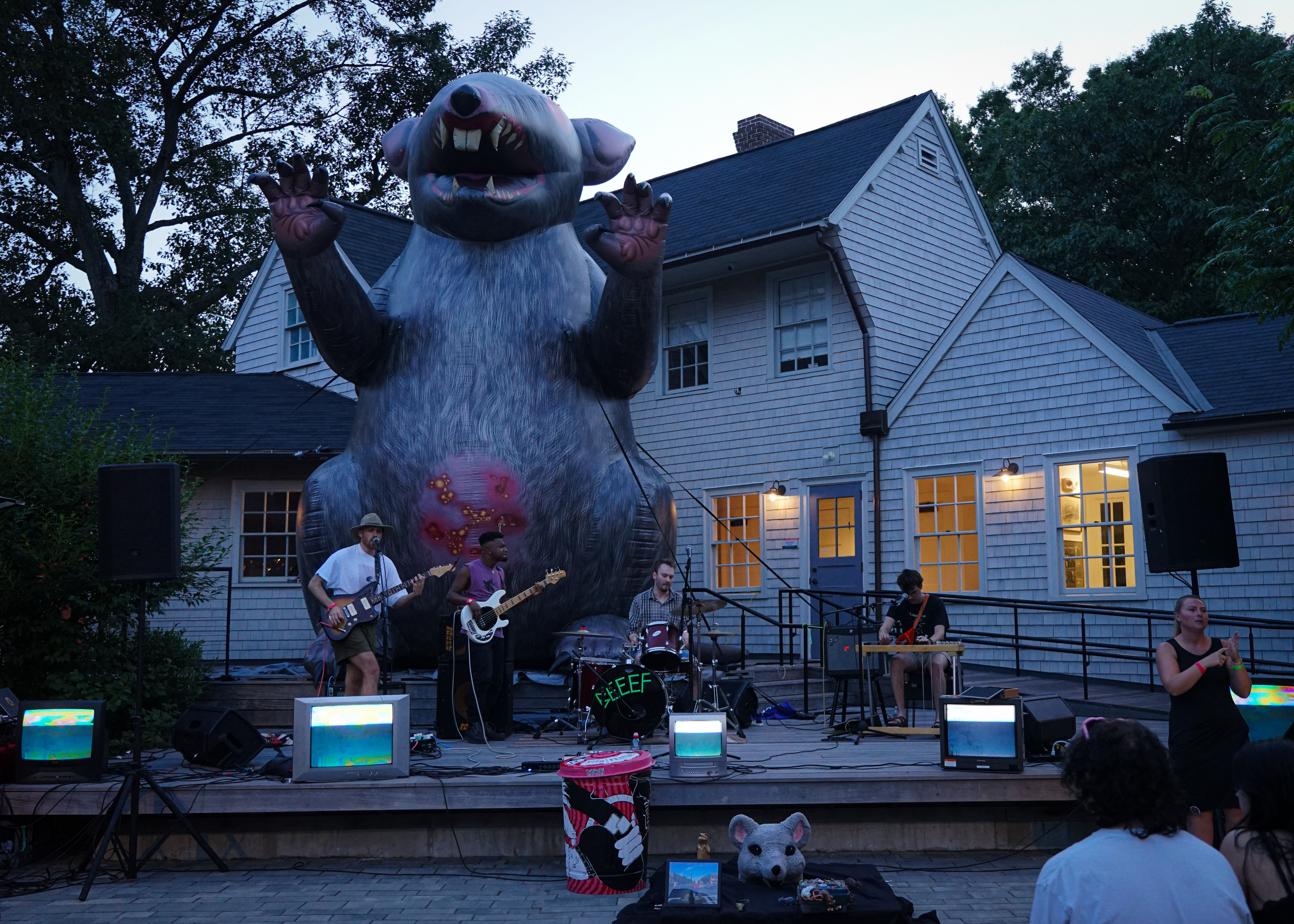
Why did you come to Allston, and how did you build your community here? When I first came to Boston, I was in my master’s program, and I’m still pretty young in my 20s. I think Allston is a great community if you are new to the city. It’s a little bit less chaotic than living in Back Bay or Southie, and it has a really nice young college scene. There are a lot of really great creative people. I love all the little thrift shops in town. The Silhouette (Sil, 200 Brighton Ave) and The Model (Model Cafe, 7 N Beacon St) have local bands playing. There’s a great music scene in Allston. There are lots of events. There was Rat City Art Festival, which was really fun.
I met my friends in Allston because they were hosting events called Public Living Rooms, where they would host block parties and bring out local vendors and local musicians. There’s a great community in Allston — lots of people, lots of parks, lots of open street events, local businesses, local music scenes, even bringing in some bigger bands or shows with the Brighton Music Hall (158 Brighton Ave) or Paradise Rock Club (967 Commonwealth Ave). And if you want to go downtown, the Green Line is convenient.
How did you find out about Public Living Rooms? Flyering in Allston is a great way to get your news or hear about events. People are always flyering on the street posts, lots of flyers inside of The Sil. The local libraries will also sometimes put up flyers in their community bulletin boards. Just walking around the streets, it’s really easy to see what’s happening.
What should people know about Allston that often takes a while to learn? If you live in Allston, learning the bus routes is really helpful — the 66, the 57, and the Green Line both go to Kenmore. Sometimes, if there’s a Red Sox game happening at Fenway, the 57 is faster. The 66 will take you to Harvard or to Brookline or Roxbury.
There’s a Goodwill on Commonwealth Ave toward Brookline where you can get good furniture. There are a lot of good thrift stores. Groovy Thrifting is on Brighton Ave. There’s Vivien Vintage, which is going towards Union Square, toward Lower Allston.
Harvard sometimes has events in Lower Allston — once they did a free paint-and-sip night. Smith Playground near the Trader Joe’s — there’s a group that meets there to skate every Monday night, and that’s really fun. There’s that rink, and also people who play hockey or roller skating games on it.
The Sil and The Model both have cheap drinks, and The Model is cash only. The public library — we have one in Allston, and there’s one in Brighton. With a Boston Public Library card you get free printing, which is helpful.
There is a city liaison you can reach out to. All neighborhoods in Boston have one. I reached out in the past because there was an intersection near my apartment that was unsafe due to parked cars blocking the corner. They sent someone from the transportation department and removed those spots.
Brighton Health Collaborative also connects people to resources. The Brighton Farmers Market is on Wednesdays in the summer into fall. ■