|
Getting your Trinity Audio player ready…
|
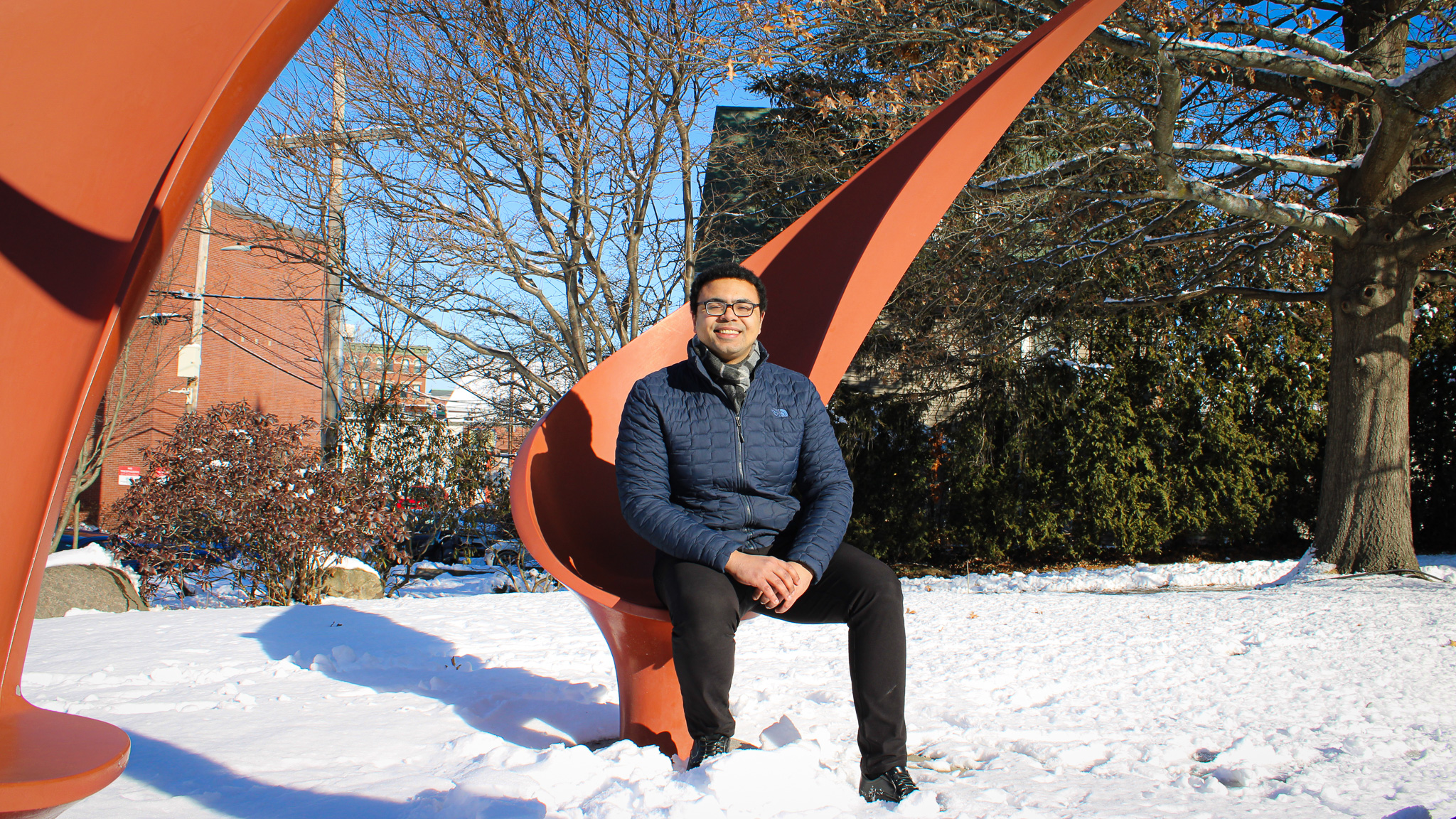
Brighton resident Cameron Berry took home the title at the ‘Jeopardy!’ Champions Wildcard. In an interview with Allstonia, he talks about his journey, favorite study spots in Brighton, and his keen interest in music. He moves onto the Tournament of Champions round, which will air tonight (January 21) at 7:30pm.
How did you get into all of this? Was ‘Jeopardy!‘ or trivia something that you’ve always been interested in, or something that you got into later on? It’s twofold. One, I’ve always had sort of this weird Magpie brain of just always picking up facts of just random levels of obscurity and just being pretty good at retaining it — so a show like ‘Jeopardy!’ just naturally appeals to something I’m pretty decent at. But also, having moved around a lot growing up, ‘Jeopardy!’ is one of the shows that is always available no matter where you are. It’s the most basic shows you can find no matter what cable packages you have; you would always have some network that was going to play ‘Jeopardy!’. So it’s just a very consistent thing even if you’re moving all around.
What prompted you to start this journey in the first place? I always thought maybe further down the line I would audition for ‘Jeopardy!’ as a middle life goal. Back for the longest time, the way you would go through the audition process, you would have actual in-person auditions that would take place. It’s sad that something as traumatic as COVID had to happen for the benefit of my time. But with the shift over to everyone needing to be locked down, it shifted to an all online process. So I thought like you’re sitting at home, you’re working remotely, if you’re going to get cooped up here, [you] might as well take your shot now.
I went ahead and I took a walk through the process of how you audition. The initial point is what they call now the anytime test which is 50 questions. I did it in like 2023 or so. If you score well enough on that, at some point, you’ll receive a message from ‘Jeopardy!’ contestant productions where the next step is. They ask you to take another test this time, it’s timed and you’re being viewed, so they want to have the ability to guarantee that you’re working within a set time constraint, and you’re doing it all off of your own mental abilities. And in my view, there’s no immediate response for any of this. It’ll just come about when they’re doing the rounds of trying to accumulate what the pool is going to look like for the next upcoming year or so. The next thing you’ll do now is a mock game. If they are interested in or if you’ve done well enough through their process, they move you on to a mock game, just to show you can actually play under the pressure and the format of what the show is.
Once you make it through then, then you’re just in the contestant pool. And then when I finished that mock game, they said I would be considered eligible to be called at any point in 18 months or so. And then if those 18 months pass, go ahead and start the audition process over again. I think I got called by Sony Pictures right on the edge of when I was going to lapse over, I got the call right before I went on winter vacation last year, so mid-December and then my first taping was in January of 2025.
I’m curious if you could describe the process of just preparing for a competition like this. I like to think of it as being very specific to just this style of trivia. If you’ve gone to like bar trivia or something, you’ll see there are tons of different formats that come around for wherever you go. There are different ways of doing it.
What I wanted to study, rather than just trivia facts, was to understand how to work within the format of ‘Jeopardy!’ and how they write their clues.
In speaking with other players, so much of what we’ve discussed is the fact ‘Jeopardy!’ clues are written in a way in which you can get to the correct response through multiple ways. They want to make it fun as something that’s being viewed by a mass audience. They want to have it be where you can pull something out from another thing you might know. So trying to figure out how to read the questions properly is pretty key. Also, like everything, there are certain subjects that get brought up a lot in ‘Jeopardy!’, just things that are fun to have repeats on. If they ever ask you about things like Norwegian painters or something, it’s only going to be one answer. You can save brain space from trying to map it out that way.
But [there’s also] thinking about how the game works. I learned from watching old episodes from Ken Jennings, who’s the longest ‘Jeopardy!’ reigning champion and now is the host. What he talked about in one of his interviews of how he learned to practice was you need to work on your timing. He found the way he intuitively knew how to do that and be able to buzz in faster than other people was just having grown up with it listening to the rhythm of what Alex Trebek would used to do to to read the questions [and] to know what it sounds like when he’s about to end the question. Before going on, my plan was just to watch as many games as possible to figure out the way that Ken reads it now, so that I’m comfortable with the pace that’s expected.
How were you feeling going into this competition? Back at the beginning of last year, I went and I won one game of ‘Jeopardy!’. And I basically thought, “Okay, that’s the end of my time playing the game on television whatsoever.”
So then getting the call to come be part of this tournament, I basically decided to treat it all as just a bonus. I wanted to go in with the mentality of “I’m not going to stress about doing well in the tournament.” I only care about, at most, winning the current game I’m in right now. If I only make it through one game, I get to play one more game of ‘Jeopardy!’ than I ever expected to have. And now somehow that has worked out that I’m in the Tournament of Champions.
I get to be around people who are very, very good at this and somehow through machinations and the weird structures of the previous tournament, I made it to that same, same caliber, at least for this one moment.
Do you have a favorite question from ‘Jeopardy!’? As for a favorite question, I don’t know. I think I liked, in my semifinal game, the Final ‘Jeopardy!’ clue that was about rubella, which is German measles. Working in college administration, I ended up seeing a ton of health history records. So I saw the MMR vaccine dates a lot, and I just said, ‘Well, what exactly is rubella?’ And then, so that’s how it came about. It’s good to have something that sort of tied into my personal life for that.
I noticed that in order to win, you wagered a very specific amount of money on your final question (5,601 dollars). What was the rationale behind that, and what was going through your head going into that final question? Because it’s a two day total score set-up for the final, my hope is that I’m not going to put myself in a position where, if I get the wrong answer, my score from the day previous isn’t enough to put me in a winning position.
Luckily, it’s worked out in a way that I spent way more time thinking about trying to make something where I would end up winning if it came to this situation where all three of us got the question incorrect. It somehow worked out that Jonathan had an incredibly low score from the first game, but was now in the lead for the second game, and Stella was ahead of me after the first game, but was now entering this Final ‘Jeopardy!’ with a low score. I know that they both can bet basically all their score to win, but they have to do incredibly large bets. All I need to do is just make sure that if they both get it wrong, I’m not going to lose. But if I get it right and then, in this case, the person who could bet to have the higher score, Stella, gets the question right, I can score high enough to be past her maximum score by 1 dollar.
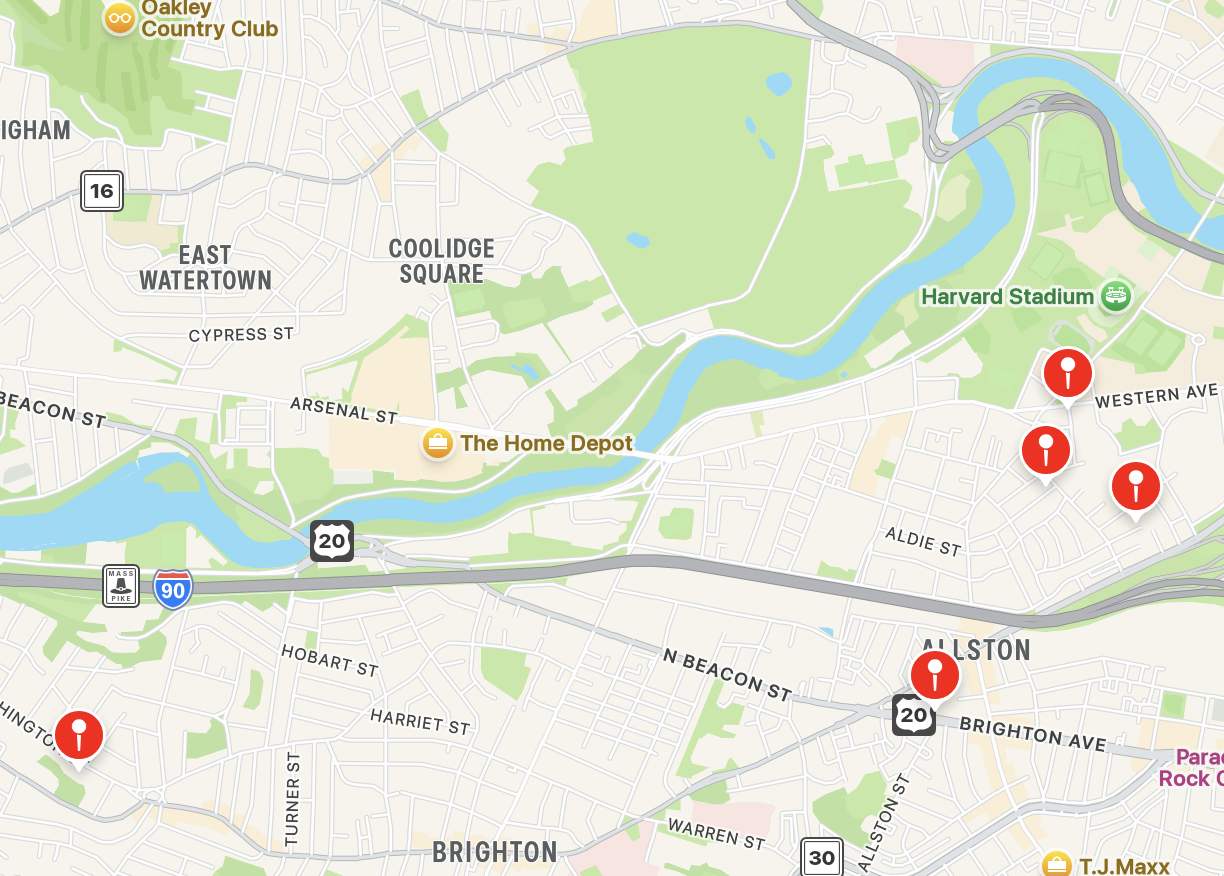
Tell us the story behind how you came to Allston-Brighton. I first started understanding Allston-Brighton as a neighborhood distinct from just the wider scope of Boston when I came to the city for undergrad. I went to Boston University, so the next neighborhood outside: you’re either going to end up in Fenway, you’re going to end up in Allston. Since then, getting to experience things like finding record stores you like, music venues you like, or good places to eat food, and actually feeling pretty comfortable around there was very nice.
It’s interesting to just be around and just see how much some stuff that I really enjoyed has changed.
I’ll just stop by the Harvard Street stop, and I’ll look over at that Taco Bell Cantina and go, “Oh, that used to be the Great Scott.” We used to see so many, so many performances there. I used to remember standing listening to some local band. The pipe would just drip down on me, and now you can get a cheap gordita crunch there.
Once I graduated from BU, I decided to stay in the area, because so many people just sort of check in for their undergrad years and then go off in a million different directions. I wanted to try and get a little bit more settled within a specific location. I decided to stay around [and] moved to a little bit quieter of an area. So initially, after college, I was living in lower Allston, which was rapidly in the process of being planned for the now developing condos everywhere. But mostly it was just demolition going on around there when I was there; it got disruptive in terms of just hearing construction noise all the time. Eventually I moved further out into Brighton, which I’ve been there now for going on eight years, and I’ve loved it.
How does the experience now compare to living here as a college student? Once you’re out of college, you find yourself spending a lot more time in the quieter establishment. If you’re living in Allston, it’s either relatively popular spots that exist there, like at the corner of Harvard and Brighton or that general cluster — or you’re just jumping between your apartment and your friend’s apartments. And then once you’re settling into your mid 20s or your early 30s, that’s when you find the quieter restaurants to go into or the smaller areas to browse around, you start feeling a lot more comfortable just having your time be in the neighborhood.
What drew you to stay in the neighborhood? I just loved the feel of it, especially the quieter parts of the neighborhood. When I started moving out further into Brighton, it really felt like a town that was very much connected to, to the wider Boston area but had its own feeling.
It could have its quiet moments, or you could invite a bunch of people over and still find something fun to do. I love the convenience of having a pretty awesome library branch that was only like an eight minute walk from my apartment, not having to go all the way down to down to the main branch. And then, there are always staple restaurants or locations that have been there since 2011 when I first came to the area. But there’s also a decent amount of change that’s happened that I’ve found interesting. I haven’t lost my intrigue in what’s new in the area.
Do you have some favorite study spots around the neighborhood? I would either study at home. Sometimes I would do it in the Brighton Branch [Library]. I would do it down in the nonfiction section in the basement. Or I would go across the block to Cafe Nation and get myself a bagel with hummus and a coffee and sit there for like two ,three hours just going through it.

I know some neighbors are putting on a viewing on Wednesday. What has the neighborhood and their support meant to you during this process? It’s something I came about pretty organically because of how much of this tournament has worked.
It was so heartwarming to know that organically, people are just watching it, and they just hear me say, “I’m from Brighton,” that they wanted to just feel like there’s something to celebrate about it. That’s another reason why I jokingly say I wanted to put down Brighton, Massachusetts, rather than just saying Boston, because I don’t want anyone from Beacon Hill to get any stolen valor from any success. It was important for me to show sort of some amount of neighborhood pride and to now know that it’s being felt back is wonderful.
On your Facebook page, you make an annual list of albums and a lot of your favorite quotes center around music. In what ways has music influenced your life? I’ve always gravitated towards music as something that serves a good way of expressing and articulating emotions that aren’t necessarily clear if you’re trying to denote an emotion just through language. It’s its own way of speaking that can get to more nuanced ideas of feeling.
Oftentimes, I just remember growing up feeling like I can’t explain in words the exact emotion I feel, but I can connect it to a specific song or a specific moment in a song and how that captures what’s going on. It had a richer thematic or emotional resonance to me, and has been the area of art that I’ve gravitated to the most.
Things like doing the annual list I found it interesting just as a way of conceptualizing a year as it goes on. It gives me some way of being proactive and not falling into the same rut of either listening to predefined playlists or just falling back on the same artists that I’ve listened to previously, but wanting to set a goal for myself to find new ways of expression that might be out there, to tap into something, some new form of expression, some new artist that I haven’t heard of before.
Do you have a favorite song or album right now? It’s either going to be About Ghosts by Mary Halverson, who’s actually a Brookline based guitarist, so local and she’s a great jazz guitarist, or the album Die in Love by Greet Death, which is like a shoegaze-ish altrock album that I really liked.
But there’s just so much stuff. [The album list] is also a good way of because I also like to put it down by genre and mood. It gives me a good idea of having something on my own to look back on and say, ‘Well, I’m sort of in the mood for alternative country or in the mood for ambient music,’ and just knowing things that I liked in those categories that I can go back to to find.
What are your hobbies like outside of ‘Jeopardy!’? I’m a big fan of reading travel. I generally take one pretty large European vacation a year in April-ish, and then obviously playing music. I’m notorious for just acquiring new and different instruments to try and learn. My mainstays have always been guitar, bass and trumpet, but I’m branching out into trying to learn the mandolin and maybe the drums. I’m a big fan of watching movies. Unfortunately, there’s no movie theater in Allston or Brighton, but going to the Coolidge over in Brookline is always great.
What’s next for you? Do you think you’ll do a future show again? In terms of my own quiz-show-game-show-trivia thing. I think that’s probably, if not wrapped, a long break. In speaking with other people in the show, they have so many interests in the different shows that they watch and have an interest in, and at some point, I would like to try something else out. At this point, I don’t know about that, but also I take sort of more pride or more of an interest now in friends who have reached out to me, who have expressed their own interest in trying to get on ‘Jeopardy!’ and helping them make that initial point and becoming something of a mentor. Because I think initially, when I did it, I was doing a pretty solo trip through it. I think if I can provide that assistance to other people, to give them the best foot forward that would feel pretty rewarding. ■