|
Getting your Trinity Audio player ready…
|
Starting last Thursday, the City of Boston began its participatory budget voting process where residents can decide how to spend over two million dollars in the City’s budget.
Any Boston resident above the age of 11 can vote for five out of the thirteen projects between January 15 and February 15. Voters can submit their choices online at the Ideas in Action website or in-person at City Hall. The projects range from increasing fresh food access to building green spaces in underutilized city-own spaces.
At the end of the voting process, the city will fund the top ranked projects until they reach the 2.2 million dollars allocated to the participatory budget. Renato Castelo, who directs the Office of Participatory Budgeting, says that the participatory budget will fund between six and nine projects, which will be announced on February 19.
The thirteen ideas on the ballot were a result of a months-long selection process. Last July, residents submitted over 1,200 ideas to the Office of Participatory Budgeting either through the Ideas in Action website or engagement with its non-profit collaborators. After an initial screening for scope and feasibility, 950 ideas were sent to three different community forums where residents could review and prioritize these ideas.

By the end of the October forums, 15 ideas were further workshopped at two more community forums in November and reviewed by relevant city departments. After combining two ideas on food access and discarding one due to infeasibility, 13 ideas remained for residents to vote on and implement.
“The overall goal of the process is to bring neighbors together and talk about the priorities they have in coming up with great ideas that the residents of the city can benefit from,” says Castelo.
Throughout the process, Castelo and his team worked with 19 organizations, including two Allston-Brighton non-profits: the Allston-Brighton Health Collaborative (ABHC) and the Brazilian Women’s Group. The non-profits helped engage community members in submitting ideas or facilitating outreach for the October and November community forums.
While the Ideas in Action initiative is intended to benefit neighborhoods across the city, Elaine Meehan, a long-time Brighton resident and the grants and partnership manager at ABHC, says that Allston-Brighton could stand to benefit from many of the ideas.
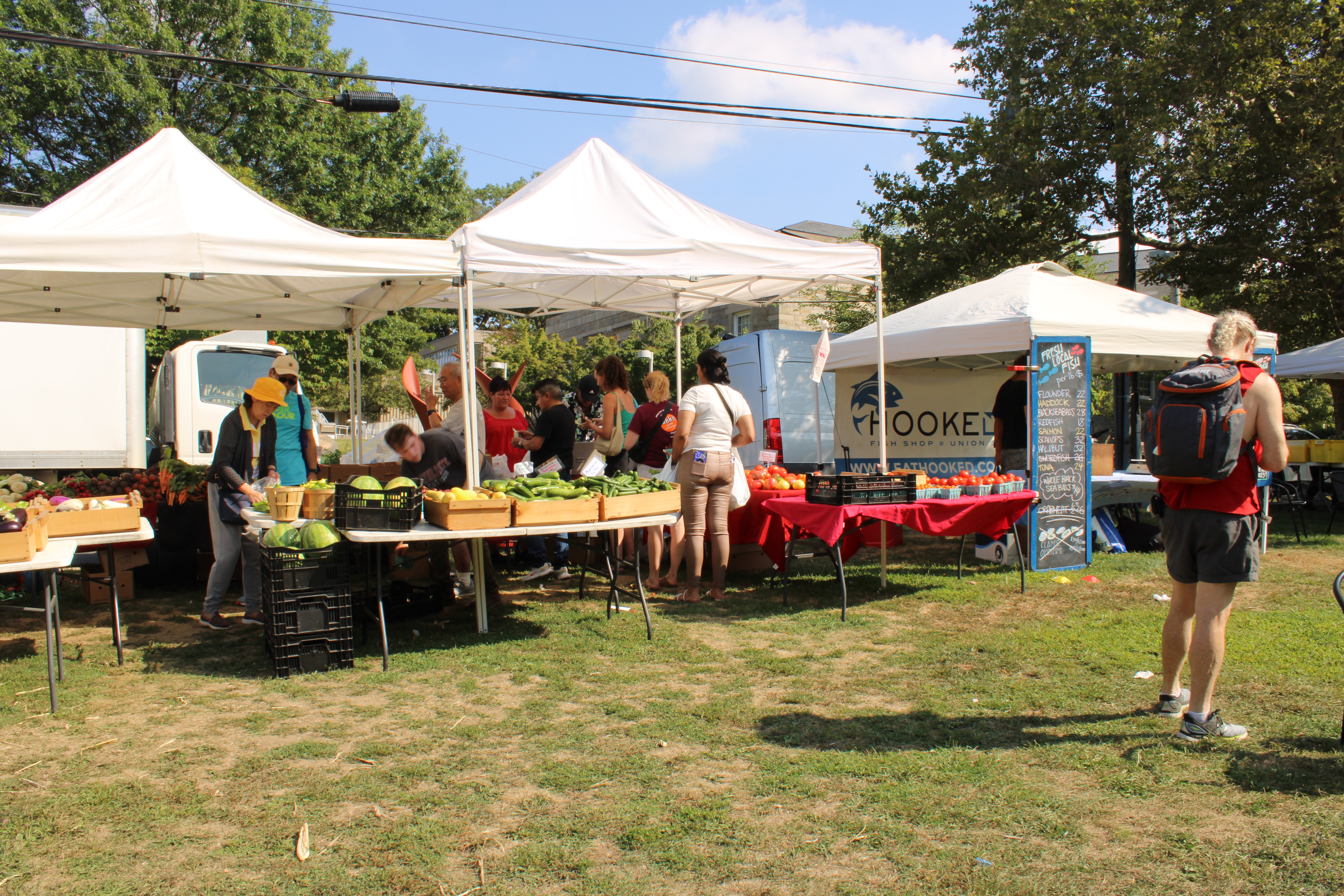
For instance, she says that the Neighborhood Health Food Initiative is especially important for ABHC, which hosts the Brighton Farmer’s Market in the summer. Meehan says that other initiatives, like the Immigration Career Pathways or Green Your Block ideas, would help the neighborhood’s diverse immigrant population or mitigate issues like heat islands in Cleveland Circle during the summer.
According to Meehan, who facilitated some of the community forums and gathered ideas at the Brighton Farmer’s Market, a few of the ideas that made it on the final list were a direct result of Allston-Brighton neighbors, such as the Voices of Recovery and Healing through Art.
Meehan especially appreciates the diversity of Allston-Brighton residents that attended the meetings. While working on the Green My Block idea during a community meeting, Meehan recalls having a conversation about the importance of green spaces for climate control with a neighbor who came from Brazil and worked in architectural landscaping.
“We’re lucky that we live in this neighborhood, and that’s how I truly feel in the fact that we get to do PB [participatory budgeting] and ideas that came from our area really will shine is amazing,” says Meehan.
This year, Allston and Brighton residents submitted 139 ideas, making it the third highest among all neighborhoods in the city. They were also among the top five neighborhoods with the most engagement during the October and November community forums.
“It makes my heart warm. It makes me feel good about who we are. Is everything perfect right now? No. Are we stressed out about taxes and stuff right now? Absolutely, yeah. But it’s good to see that those taxes do have impact, and that we have a say in the impact,” she says.
Meehan encourages Allston-Brighton residents to vote, emphasizing the voice that the neighborhood could have given its size.
“We’re the second largest area of the city of Boston. That means we also have the opportunity to make a difference if we all actually vote,” she says. “This is your chance. You actually get to make a difference.” ■