
|
Getting your Trinity Audio player ready…
|
State Senator William Brownsberger defended his position to oppose Mayor Wu’s property tax proposal, which would shift the tax burden from residential to commercial properties, at a community meeting on Monday night.
During the meeting, Brownsberger cited the already high tax rate on commercial property along with the decreasing commercial valuation as the primary reasons behind his opposition to Wu’s proposal.
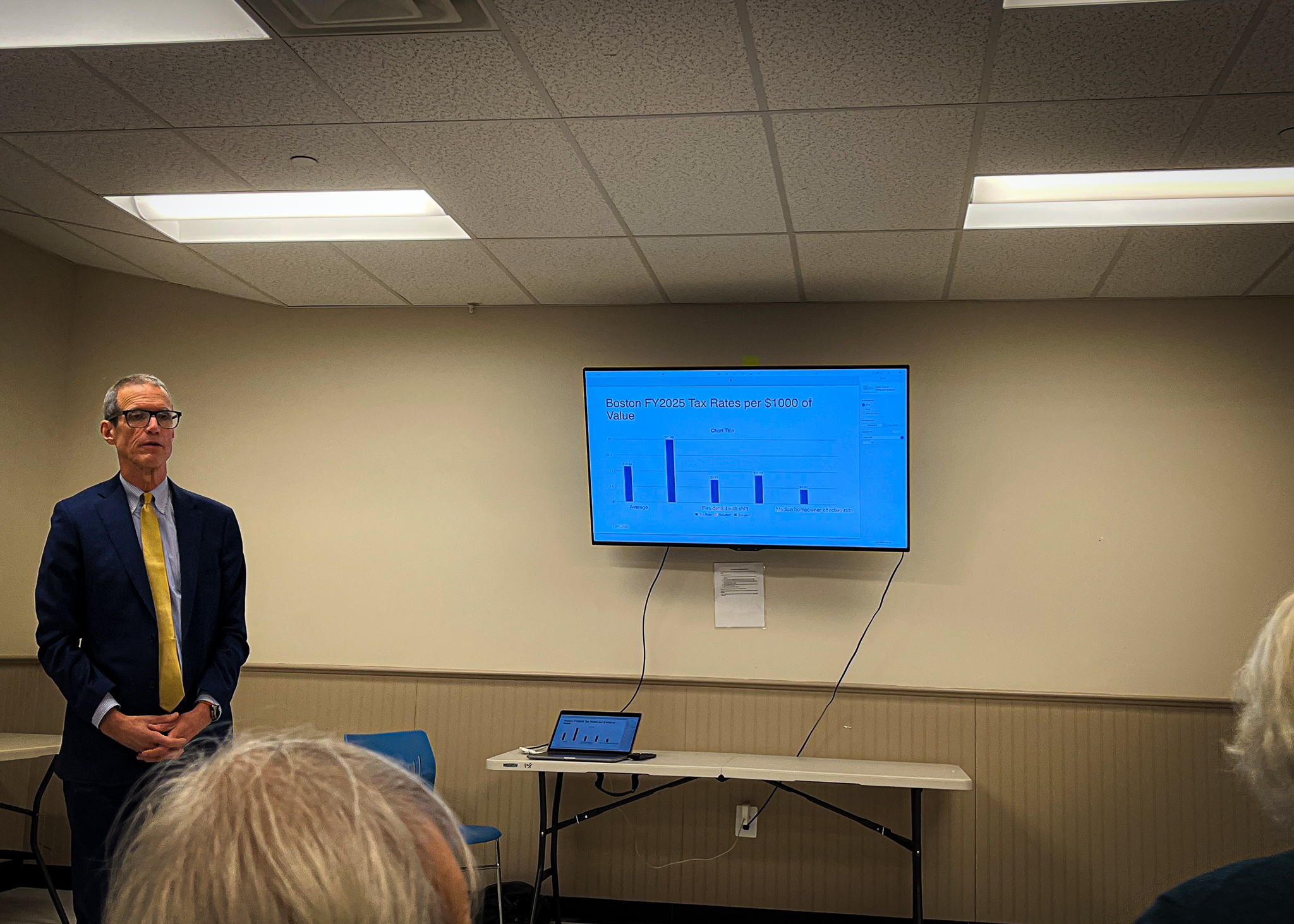
The current FY25 tax rates, which will be folded into tax bills starting January 1, will bump the residential nominal tax rate from 10.90 dollars to 11.58 dollars. Commercial tax rates will increase from 25.27 dollars to 25.96 dollars. Wu warned that the average homeowner will face an increase of 13 percent under these new rates.
Wu pushed forward a bill that would soften some of the tax increases on residents. Her bill HD.4422 would increase the residential rate by a lower margin to 11.03 dollars. At the same time, however, commercial properties would land a larger increase to 26.92 dollars. The proposed commercial rate would exceed the maximum 175 percent ceiling on tax rates, requiring Wu to seek approval. The average tax rate is 14.83 dollars.
Brownsberger believes that increasing an already higher commercial rate would hurt struggling businesses. “High business rates disadvantage all businesses, including small businesses,” says Brownsberger. “Discounted residential rates advantage even the wealthiest homeowners.”
Some attendees say that concerns about the proposal’s impacts on businesses may be overstated at the expense of residents.
“Some homeowners don’t have the wiggle room to withstand another year of 13 percent, 14 percent, so on — much less the renters who the landlords will pass [these increases] through, forcing younger residents out,” says Kevin Carragee during the meeting. “I don’t see the Mayor’s proposal as a radical proposal that’s such a burden on commercial property owners. I really don’t.”
Residents also spoke out in frustration that the increase in property taxes compounds the increasing cost of living in the neighborhood. One teacher, who retired after teaching for 34 years at Boston Public Schools, said that she had to come out of retirement in order to pay the taxes. Another homeowner in Brighton, who works as a daycare provider, said that she continuously had to raise her rates in order to keep up with increased mortgage resulting from these increases along with more costly utilities and insurance premiums.
“We want to have a family here, and we’re absolutely priced out, and this will be the nail in the coffin,” says Leann Kosior, who also spoke at the meeting. “If you want young people to be in Brighton, you can’t raise taxes.”
Other residents criticized the city’s spending for driving these property tax increases. Compared to the 2024 budget, this year’s city budget represented an eight percent increase in spending. Mayor Wu has sought to mitigate the rise in spending with a hiring freeze and ordered every department to cut their budget by 2 percent in the next year.
Brownsberger says that he is working toward creating avenues where municipalities can provide relief for certain groups — including senior citizens, MassHealth beneficiaries, unemployed persons and high-need neighborhoods. His bill proposes to provide relief to the third and fourth quarter in years where residential property tax bills increase by more than ten percent.
In the meantime, Wu’s proposal remains stalled in the State House. The city council recently passed legislation that would put the 2025 rates in place starting next year. ■
